Thursday, January 29, 2026

RESEARCH - In-Depth Analysis of Exemplars

 Exemplary Examples

    Now that I have researched the conventions of film openings in general, I want to see how this would actually apply within my genre. I also would like to see how all the other conventions and techniques I have learned about through my research look in action. To reach these goals, I will be watching and analyzing the opening scenes of two amazing dystopian thrillers - The Hunger Games and Divergent!

The Hunger Games


    The opening scene for The Hunger Games is partially unconventional in its approach. It does not include any credits within the opening scene but, instead, uses an excerpt from the "Treaty of Treason" to lead into the title card. The excerpt begins a process of world building and immerses the audience into the scene. 
    
    The non-diegetic music in this part of the scene is slow and matches the pace of the transitions of text. Additionally the title is a simple font and white text on a black background for direct contrast; this is also unconventional for a dystopian thriller. All together, this creates and heightens the scene's suspense while immersing the audience.

    The scene then shifts to an interview between a show host and the game maker. The game maker describes the hunger games history in a positive light; however; the interview is taking place in an area with a colder lighting scheme. This color scheme is typically used to display power imbalances or oppressive themes.

    The interview is stopped short by a sudden cut to District 12, where you can hear Primrose's screams because she feared she would get chosen for the games that were just described in a better light. This signals to the audience that something is not right within the world of the film, which further establishes its genre as a dystopian thriller.

    The cut immediately goes to an establishing shot to signal the setting, which is very conventional of film openings. Throughout this section of the scene, Katniss comforts primrose; however, the majority of this interaction is filmed through random movement. This immerses the audience and makes Primrose's fear almost palpable.

    When I saw the excerpt for the "Treaty of Treason," I was immediately inspired by it. I hope I can add something similar to my film opening. I also want to incorporate random movement into my film like this film opening did because I truly believe it can add so much to a scene if it is used properly. When I watched this opening scene, I could feel the same fear Primrose felt and I got literal goosebumps!

Divergent


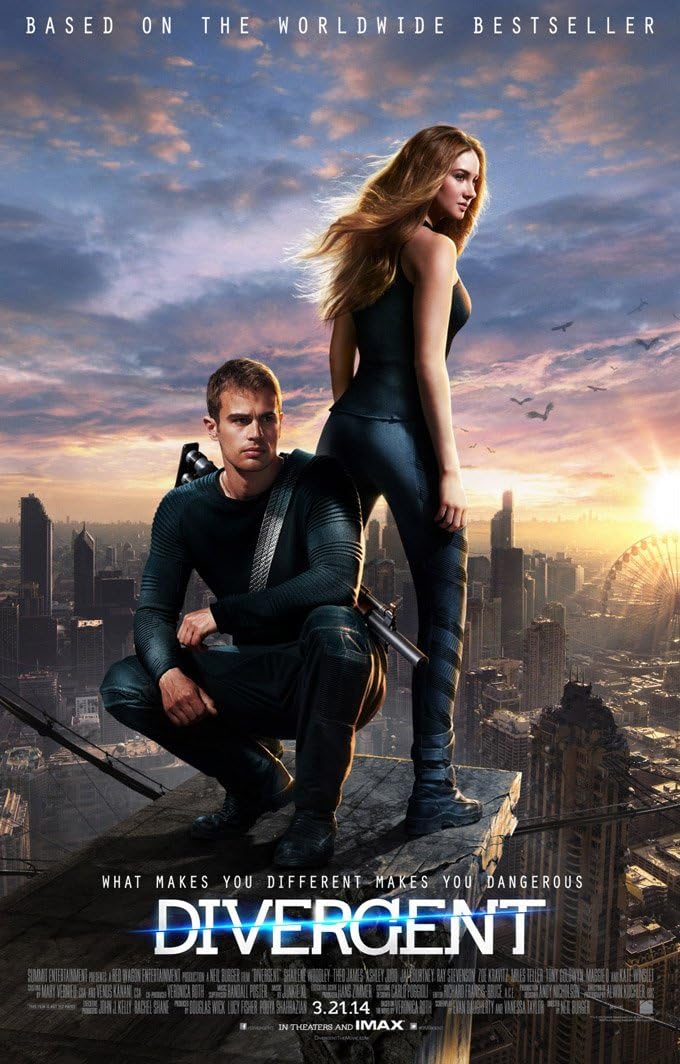
    Because I couldn't find any clips of the opening scene that were about two minutes long, I will simply be analyzing the first two minutes of this recording instead. The opening scene follows many conventions for film openings. The clip starts with the production logo for Summit and then moves to the actual scene.

    The scene consists of several establishing shots, wide shots, and slow pans to establish the setting. This provides the reader with visual context of situation the characters are living in. The buildings all look beaten down, the entire city is encaged, and there are no cars or motor transportation within the city. 

    This allows the reader to assume that this was intended to keep the city's inhabitants trapped within its borders. This enhances the suspense of the scene and signals to the audience that they are watching a dystopian thriller.

    Additionally, the first two minutes of the opening scene lack non-diegetic sound and dialogue. This is unconventional as sound elements usually play a major role in conveying information about a film during the opening. This, in turn, unsettles the reader and adds to the building suspense of the film opening.

    I really liked how unsettling the lack of sound was in this film opening. While I think I still want to incorporate some dialogue, I think I may try and limit how much sound is actually being presented. In an article I read earlier this week about JAWS, I learned that the shark barely got screen time; however, the silent pauses built up a lot of tension and that is something I think that will help me convey my genre to audiences better.

Reflection

    Now that I have watched and analyzed some exemplars of film openings in my genre, I have gained a lot of new ideas I want to apply to my film opening project. I hope to incorporate random movement, an opening text card, and minimize the sound in my brief. I think this will not only build suspense and immerse the audience, but also allow me to clearly convey mu film's genre. After gaining all this insight on conventions of film openings and dystopian thrillers, I want to see how the producers of these films target and appeal to different audiences in my next blog. 

    Until then, farewell!

Saturday, January 24, 2026

RESEARCH - Film Opening Conventions

Figuring Out Film Openings

    Now that I understand the conventions of my chosen genre - dystopian thriller - I must embark on a journey to understand the conventions of a film opening. This is especially important for me to focus on since for the brief, my task is to make a 2-minute film opening. While conducting this research, I want to investigate or highlight how these conventions are applied within my genre a little.

Company Production Logo


    The company production logo is the brand logo and is placed before the beginning of a film. It is generally used to inform the audience of who produced the film they are about to watch. In some cases, for specialized film production companies, this logo could act as a signal for a specific movie genre or style.

Titles


    Titles are like names for a film; they tell you what the film is generally about. Conventions for factors like the color and font of a title change based off the genre of the film. For example, happier films will typically use brighter colors and simpler fonts for titles to create a light, upbeat tone. On the contrary, darker films, like dystopian thrillers, tend to use darker title colors and more complex fonts to begin creating suspense or fear.

Credits

pics

    Credits are used to tell the audience who was most relevant in the process of making a film. Most commonly, credits list the main actors, the director, and the executive producer of a film. They also occur directly prior to the title of a film and typically share the same font and color as well. While titles are usually centered to draw attention to them, credits are often placed to the side so that they are visible without causing a major distraction from the action on screen.

Camera


    Film openings tend to use a lot of long shots and establishing shots to establish the film's setting. Additionally, it is common to see close-ups on the protagonist of a film to tell the audience who the film is about. Different camera shots, angles, and movements can be used depending on the genre of the film as these give the audience clues to determine the type of movie they are watching.

Sound

    Some common sound conventions of film openings include diegetic sound, non-diegetic voiceovers, and soundtracks. Diegetic sound, like the sound of a car engine in a scene, can be used to add a sense of realism and evoke emotional responses from the audience. Voiceovers, especially autodigetic ones where the speaker is an unreliable narrator, allow the audience to gain perspective on the protagonist's character, personality, and hidden insights. Finally, soundtracks can be used to set the mood for a scene, or sequence,  while it can also be used as a contrast or irony within a scene.

Editing

Blade Runner - Cold Lighting

    Film openings tend to have generally fast cuts in order to provide the audience with a lot of basic information about the film in a short period of time. Different genres of film openings may use slower cuts or different intensities of lighting, as well. While films tend to follow a consistent timeline, many openings are scenes that are happening at a different point of the film's timeline. A common example of this would be a flash forward to the climax of the film and a rewind to the current point in the story. For dystopian thrillers, cold colors and lighting (like blues and whites) are common, just as fast paced cuts are.

Reflection

    Now that I have learned the major conventions of a film opening, I have come to realize that my project will have to be very focused on conveying my genre. For my brief, I will have to create a production logo and take the design of the title and credits into much consideration. While I knew there would be much to take in mind to create my film opening, doing this research helped me put that view into further perspective. To help me visualize what this would look like, I will be studying exemplars from my genre, and possibly past candidates, in my next blog. This will help me get a clearer idea of how I should go about the creation of my brief.

    Until then, farewell!


Sources:

Monday, January 19, 2026

RESEARCH - Cinematic Strategies in Dystopian Thrillers

Technical Elements in Dystopian Thrillers

    Now that I know some major camera elements used in dystopian thrillers, I must learn the other technical elements commonly used in these films. This includes discovering how directors utilize aspects like sound, lighting, and editing techniques to create meaning.

Sound

The Others Arrive scene in The 5th Wave


Voiceovers: A voiceover is when there is an off screen narrator providing the audience with information. It can be used to provide insight on a character's personality as well.

Dialogue: Dialogue is the spoken words within the digests and is usually between two or more characters in a scene. It can be used to signal a characters internal emotions or provide the audience with general information.

Diegetic Sound: Diegetic sound is any sound that happens within the digesis. This can add a sense of realism to films, further immersing audiences into the world of the story.

Discordant Sound: Discordant sound is any sound that is unpleasant to listen to. This can be either digetic or non-digetic and it usually has negative connotations. This can be used to disorient audiences and increase tension within a dystopian  thriller.

The clip above from The 5th Wave is a great example of all these sound techniques. It utilizes the techniques to increase the tension of the scene and create a sense of foreboding, or dread.


Lighting

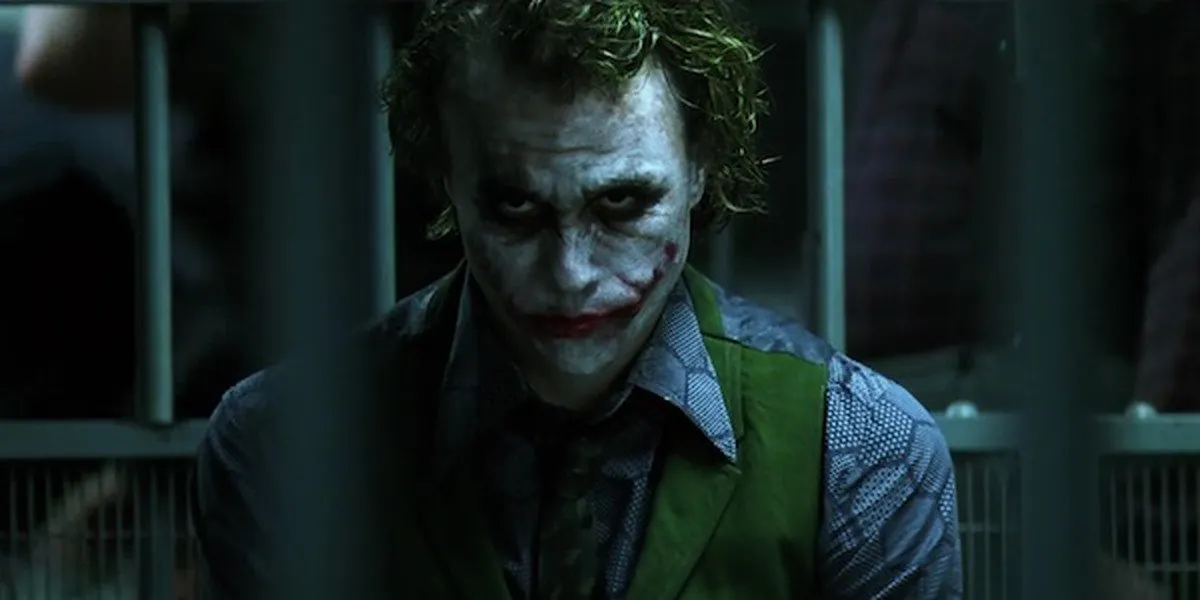
in The Dark Knight

Low-Key Lighting: Low-key lighting is when a light is used to create shadows. This creates a sense of mystery or foreboding in regards to a character or object in the scene.


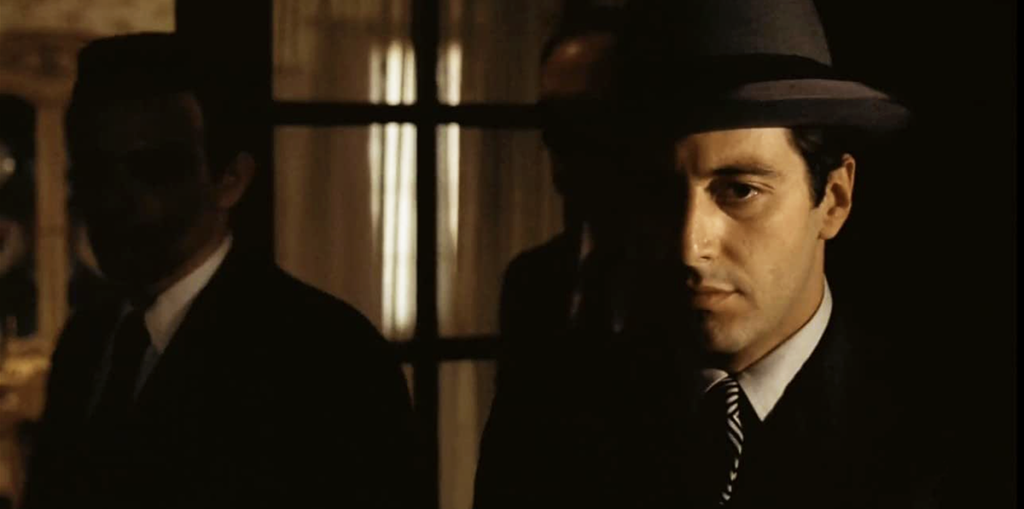
in The Godfather

Chiaroscuro Lighting: Chiaroscuro lighting utilizes stark contrasts between light and dark to create harsh shadows. This results in a more dramatic version of  the effect you'd get from low-key lighting.


in Divergent

Cold Lighting: Cold lighting is the use of cooler colours such as blues, greens, whites, and greys. Cold lighting is commonly used in dystopian thrillers to portray isolation, apathy, and emotional distance.

Editing

Jump Cuts: Jump cuts are used to create an illusion of jumping through time, similar to a time skip. In dystopian thrillers, this can be used to heighten tension and stir unease in the audience.

Parallel Editing: Parallel editing is a cut between two different scenes of action that are occurring at the same time to create tension and urgency. It can also be used to build suspense and speed up the pacing of a film.

Graphic Match: A graphic match is a cut between two similarly shaped objects. It's used to show a passage in time or change in location, aiding in a film's continuity.

Reflection

    Upon doing this research, I think I want to minimize the amount of dialogue in my film. I think the absence of dialogue will build suspense for the audience. Additionally, I want to utilize jump cuts and chiaroscuro lighting a lot to give my opening a mysterious and suspenseful feel. I think this will help me make my film opening truly resemble a dystopian thriller.

    In my next blog post, I will begin researching the conventions of film openings as a whole so that I can get a clearer idea of what is expected of me. I can't wait to see how this can relate to my ideas for a dystopian thriller.

    Until then, farewell!

Sources (Editing, Sound, Lighting):

Sunday, January 18, 2026

RESEARCH - Camera Elements in Dystopian Thrillers

 My Genre Choice Is...

    After a lot of careful consideration, I have decided to film the intro to a dystopian thriller for my brief. I hoped to invoke deep emotion and thought through bold societal commentary and I believe that I will achieve this best with a dystopian thriller. To ensure that my opening resembles a dystopian thriller as much as possible, I will be researching how these films use different technical elements to create meaning.

Camera Angles

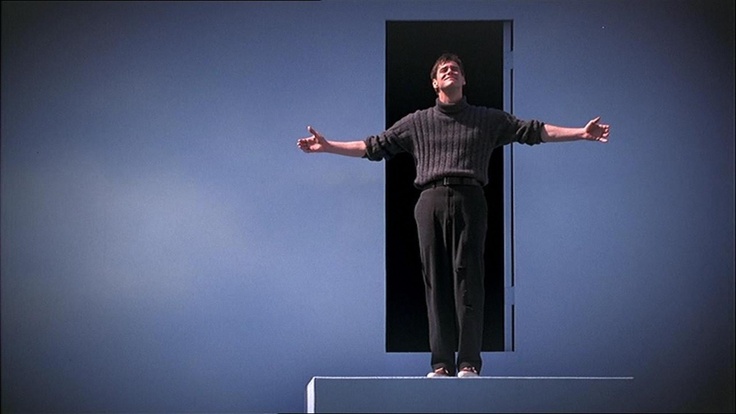
Truman's escape from the dome in The Truman Show

Low Angles: Low angles are shots placed at an upward angle below the eye-line.  This can make a character seem more powerful, or vulnerable, in a scene.


Opening Ceremony Parade scene in The Hunger Games

High angles: High angles are shots placed at or above the eye-line of a character. This makes a character look smaller and, therefore, more vulnerable and weak. This can be used for isolating the protagonist as an outlier within the dystopia.


in Thor

Dutch/ Canted Angles: Dutch angles are camera shots with a tilt on the horizontal axis of the camera. These often signal that something is wrong within a scene and are used for a disorienting effect on audiences.

Camera Shots

Peeping Cassie scene in The 5th Wave

Point-Of-View Shots: Point-of-view (POV) Shots show what a character is looking at from that character's point of view. This immerses audiences and can draw their attention to a specific object in the scene. This can create suspense, which is crucial for thrillers.


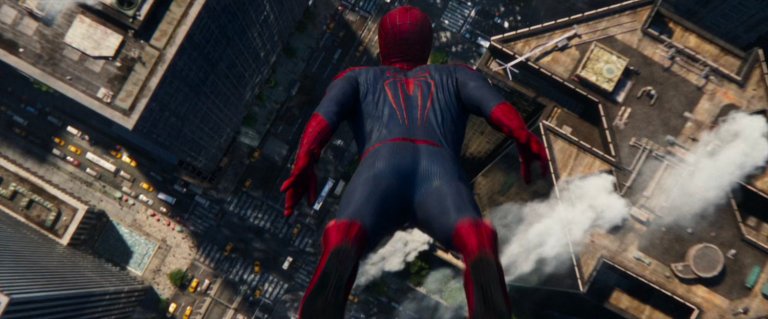
Spider Skydive scene in The Amazing Spider-Man

Aerial Shots: Aerial shots are shots that look down on a scene in a way similar to a bird's eye view. This has a similar effect to a high angle in the sense that it makes the characters in scene look smaller and more vulnerable. However, it can also be used to add a sense of foreboding as well.


Tony in Space scene in Avengers: Endgame

Extreme Close-Ups: Extreme close-ups are shots that taken at a very close range to allow the audience to read facial expressions or body language. This can draw attention to a certain character and create tension and suspense.

Camera Movements

Dolly Zoom: A dolly zoom, or vertigo zoom, is a push-in or a pull-out that is combined with a zoom out. This alters the depth perception within a frame which can disorient audiences. It's commonly used to highlight internal conflicts, power imbalances, vulnerability, and tension, making it a staple in thrillers.

Random Movement: Random movement is a handheld shot that is meant to immerse audiences and convey a character's instability. It's best used for realism and chaotic, high-tension scenes in dystopian thrillers.

Slow Push-Ins/ Dollies: Push-ins, or dollies, are when the camera moves towards the subject of the scene. These are used to infer a character's internal conflict and to increase tension.

Tracking/ Pans: Tracking is when the camera physically moves during a shot and follows the subject. Pans are horizontal movements of the camera within a scene. These techniques are used to add dynamism to a scene and provide the audience with information. In a dystopian thriller, they can be used to display dystopian settings and create a sense of unease.

Research Reflection

    Now that I have researched these camera techniques, I am getting more of a sense of how to film my opening in order to adhere to the its genre's conventions. I'd like to use a dolly zoom, a point-of-view shot, and a lot of dutch angles in my film opening. This will allow me to convey that something is off and begin to create a little suspense in my opening. 

    While I have not completely decided the exact film opening I would like to do, doing this research has given me an idea for a plot. I hope to continue to develop this idea into a captivating storyline for my film opening. In my next post, I'm going to explore different ways sound, editing, and lighting are used in dystopian thrillers to create meaning.

    Until then, farewell!
Sources:

RESEARCH - Top Three Genre Choices


My Top Three Genres!

    Since I knew I wanted to do a film opening for my portfolio, I began to think about what I believed would make a good movie and film opening. I knew this started with picking a genre I would enjoy working with, so I decided to research my favorite three. While I enjoy almost all genres, I tend to gravitate towards films that focus on small and large details to immerse the audience and elicit deep emotions and thoughts. Therefore, I decided to conduct research on Romance-Dramas, Dystopian Thrillers, and Science-Fictions.

Romance-Drama

    Romance-dramas tend to comment on the complexities of romantic relationships. This is typically accomplished by following a male and a female lead who develop a connection with each other. It is not uncommon for these films to have more tragic conclusions with the leads being unable to stay together in the end. These films, in addition, explore powerful themes like death and heartbreak.

    Romance dramas tend to use both interpersonal and intra-personal aspects of life to add to the complexity of the relationships. For example, a character may need to overcome a personal change or accept a certain reality. Intra-personal examples could include societal condemnation for things like differences in race, status, or associated groups. Romance drama films use tropes like enemies-to-lovers and love triangles to convey these struggles.


Sources:

Dystopian Thriller

    Dystopian thrillers tend to revolve around a dystopian scenario caused by an antagonist and a protagonist's need for safety from it. These films are used as warnings against possible futures that may occur if the current world does not change. They often have strong commentary on modern life and invoke strong emotions.

    These films use strategies like time limits, red herrings, disadvantages for the protagonist, and isolation to create a sense of tension. Additionally, these factors allow the films to delve into strong themes like death, oppression, and war. In films such as these, the protagonist tends to discover the truth about the antagonist, usually a trusted leader, and escapes the dystopia to achieve safety. Sometimes, the protagonist may return to save those who are still oppressed.


Sources:

Science-Fiction

    Science-fictions tend to focus on futuristic ideas and technology, and are most commonly associated with outer space and aliens. These movies tend to have captivating visual and sound effects to immerse the audience into the fictional world being created. These films can be used as predictions for the future of the world.

    The science-fiction genre has several sub-genres such as steampunk, cyberpunk, hard science, and science fantasy. Because of this, science-fiction films can immerse audiences in a variety of formats. Additionally, science-fictions tend to capture audiences' attention through tropes like evil scientists, robot takeovers, and alien invasions.


Sources:

Critical Creative Reflection

 Critical Creative Reflection     All right, now that I have finished my blog posts and film opening, it is time for my Critical Creative Re...